Dr. Brian Sloan is the Director of Ruminant Business at Adisseo, bringing over 36 years of industry experience. He began his academic journey in biological sciences, shifting to agricultural biochemistry for his undergraduate degree and completing a Ph.D. working with dairy cow trials at Newcastle University. Dr. Sloan’s expertise in ingredients, agribusiness, and agriculture has significantly advanced ruminant nutrition globally. He leads strategic initiatives and innovations in the amino acid business, contributing to sustainable and efficient farming practices.
Dr. Brian Sloan’s presentation explores the challenges and opportunities of feeding dairy cows in pasture-based systems, with a focus on protein nutrition and balancing nitrogen fractions to optimize rumen performance. He begins by situating the discussion within the broader context of a rapidly evolving industry, where automation, genomics, artificial intelligence, and sustainability are reshaping dairy production. Precision feeding and continuous monitoring are emphasized as essential tools for profitability and efficiency.
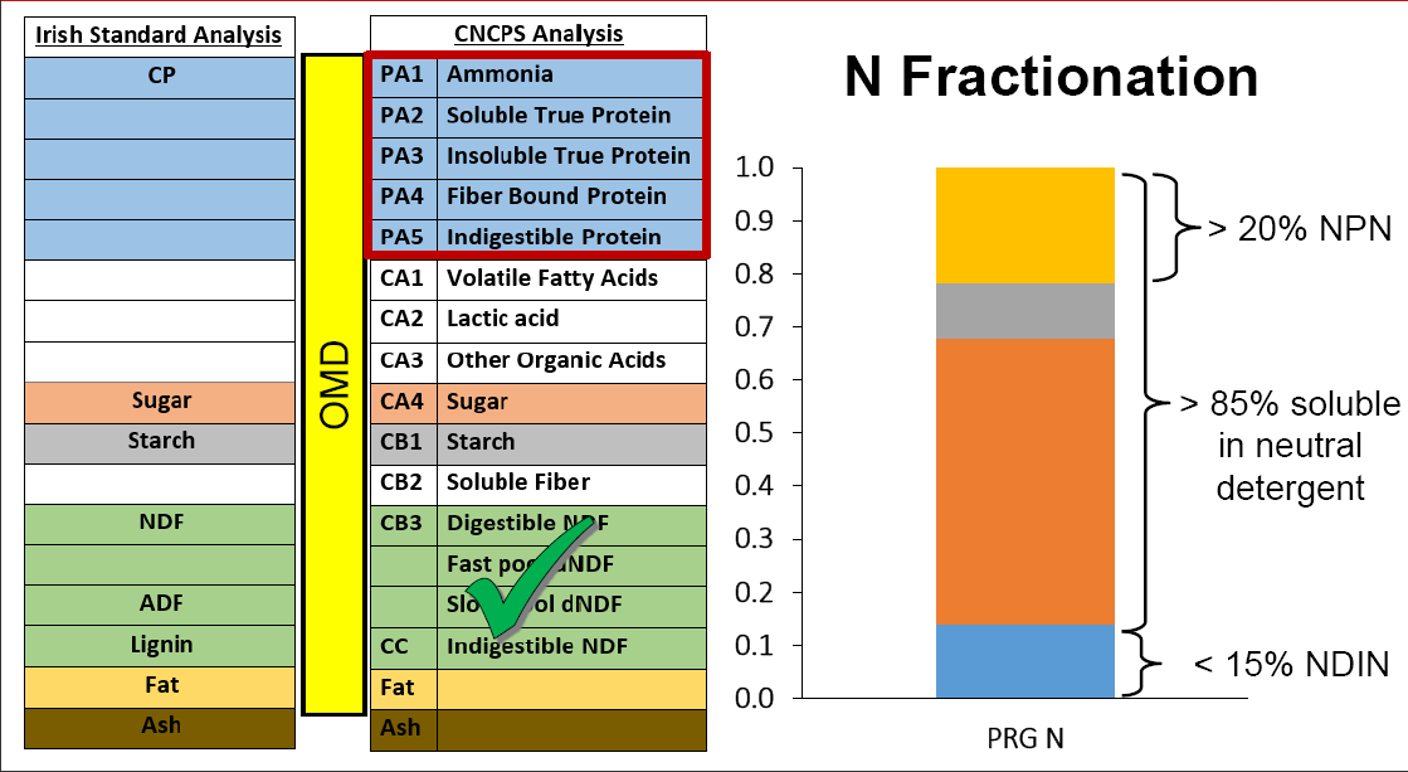
A central theme is the limitation of evaluating pasture quality solely by crude protein (CP). Sloan highlights the need to consider non-protein nitrogen (NPN), rumen degradable protein (RDP), rumen bypass protein (RBP), and other fractions. Using the Cornell Net Carbohydrate and Protein System (CNCPS), he demonstrates how nutrient degradation rates and passage rates can be modeled to predict rumen availability and microbial protein synthesis. Seasonal variation in pasture quality is shown to strongly influence fiber digestibility, with spring pastures degrading more rapidly than autumn or drought-stressed pastures.
Pasture-based diets in Ireland typically feature immature perennial ryegrass with high CP and sugar concentrations. While this provides abundant nitrogen and fermentable substrates, much of the protein is extensively degraded in the rumen, making cows heavily reliant on microbial amino acid supply. Supplementation strategies are therefore critical. Sloan reviews trials comparing starch, fiber, and sugar supplements: starch-based concentrates increase milk protein yield, fiber-based concentrates enhance milk fat yield, while sugar supplementation has little effect. Rolled barley and rumen-protected soybean meal (RP-SBM) are highlighted as effective complements to pasture, improving milk solids and protein yield while reducing milk urea nitrogen.
Experimental data show that combining energy and protein supplements yields the greatest improvements in milk production and composition. For example, citrus pulp increased dry matter intake, while RP-SBM boosted milk protein output. These findings underscore the importance of balancing metabolizable energy (ME) and metabolizable protein (MP) supply, particularly in early lactation when intake lags behind production demands.
Finally, Sloan outlines updates in CNCPS version 7, which introduces a dynamic gastrointestinal model, disaggregates fiber into fast and slow pools, incorporates protozoa metabolism, and refines nitrogen recycling and post-rumen digestion. These advances allow more precise predictions of nutrient flows and support better feeding strategies.
In conclusion, the presentation stresses that while pasture provides a strong nutritional base, its imbalances necessitate targeted supplementation. By integrating advanced modeling tools like CNCPS v7 with strategic use of starch, fiber, and protected protein sources, dairy producers can maximize rumen efficiency, improve milk yield and composition, and enhance sustainability in pasture-based systems.
NZARN members a copy of the presentation is available below if you are logged in.
Non-members looking for more information are encouraged to use our ‘contact a nutritionist’ form and ‘member directory’ to find a member who can help them answer their questions.
If you are a Rural Professional interested in joining the NZARN please see our ‘membership’ section.