Rachel Durie is a Senior Consultant with Perrin Ag. Growing up on a dairy farm and now contract milking with her partner in the Waikato, she brings practical, on-farm experience to her advisory work. Rachel works with a wide range of farming businesses, from owner-operators to Māori agribusinesses, supporting both day-to-day operations and longer-term planning. Her work spans systems, people, and performance, alongside environmental and compliance support, with a focus on turning complex information into practical decisions.
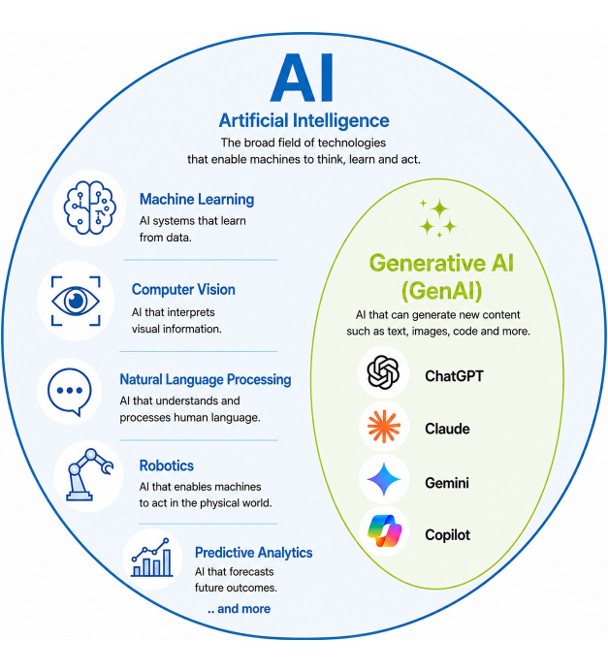
More recently, Rachel has focused on the application of generative artificial intelligence (GenAI), exploring how tools like ChatGPT can be practically used on farm to support decision-making, reduce workload, and lift performance.
Rachel focused on generative AI adoption in farming, drawing on roughly 15 months of engagement with farmers to map out where and how these tools are actually being used. Three broad use case areas emerged: decision support, contextual analysis, and communications support. Decision support was the most straightforward, with farmers using tools much like a search engine for knowledge access. Contextual analysis produced the richest examples, particularly in data-heavy areas like herd management, animal health, breeding, and reproduction. One notable example involved a vet and farmer querying combined datasets together to decide which cows to dry off. Communications support included drafting, summarizing, and staff-facing tools, with one farmer building a custom GPT account linked to trusted industry data for pasture management questions, which staff could query in real time for things like grazing round guidance.
On the question of why farmers were engaging, the main motivation was reducing reliance on external advisors and streamlining day-to-day decision-making. Barriers were also real: some farmers felt their existing systems were sufficient, while others simply lacked the digital literacy to know where to start. The Rogers diffusion framework was used to overlay these use cases against adoption stages, giving a rough sense of where the sector sits overall.
Several limitations were highlighted. Generative AI cannot capture tacit knowledge, the kind of observational understanding stored in farmers’ heads that is rarely articulated or digitized, which means it remains out of reach for these tools. Data access and interoperability between farm software platforms and AI tools is still a meaningful constraint, though it is improving. Hallucinations were flagged as a genuine risk: these tools present false information confidently because they are pattern-matching rather than reasoning, and they have no real understanding of what they are saying. Bias introduced through training data was also noted as a concern, particularly for outputs that may not reflect local or sector-specific realities.
Looking ahead, agentic AI was introduced as the next frontier: systems capable of making decisions and executing goal-directed actions with reduced human oversight. Two futures were sketched. A conservative scenario still constrained by data interoperability, where AI assists but the farmer decides, and a more aspirational scenario with high data integration and increasingly autonomous recommendations. The two-to-three year window was suggested as the likely timeframe for meaningful movement along this curve.
Practical guidance for those starting out included beginning with simple tasks like document summarization, photo analysis, and basic Q&A, being deliberate about prompting, and paying attention to privacy. Free tools generally use input data for training, while paid or enterprise versions typically offer stronger protections.
A survey of around 105 professionals, predominantly rural professionals working in the dairy sector, found Microsoft Copilot and ChatGPT were the most commonly used tools, with most respondents intending to increase their use over the next twelve months. The main concern was client data privacy.
The Q&A raised several sharp questions. The environmental cost of data centers was acknowledged but noted as difficult to quantify at the individual level. A pointed question was raised about whether AI could be shaped by paid lobbying or commercial interests over time, filtering responses in ways that disadvantage farmers, similar to how news is filtered in some countries. No firm answer was offered. A question about government and levy body frameworks for safe AI use drew the response that some enterprise tools already block data from being sent back to providers, which is one practical safeguard available now.
NZARN members a copy of the presentation is available below if you are logged in.
Non-members looking for more information are encouraged to use our ‘contact a nutritionist’ form and ‘member directory’ to find a member who can help them answer their questions.
If you are a Rural Professional interested in joining the NZARN please see our ‘membership’ section.